Weekly Roundup: Holiday Classics New and Old
Happy holidays everyone! It's been a busy week so I only managed to watch four films—all of them holiday (or close enough) classics.
I'm going to catch Marty Supreme in theater with my family this Christmas Eve and following it up with a thematically appropriate dinner at Saul's Delicatessen. I'm looking forward to recapping that as well as writing a year-end roundup next week.
I hope you all have a great holiday and maybe find time to enjoy a film or two.
Here's what I watched this week:
- The Holdovers, a modern Christmas classic that feels like a warm blanket
- Tokyo Godfathers, Satoshi Kon's animated film about found family and Christmas miracles
- Steven Spielberg's autobiographical The Fabelmans, which has one scene set during Hanukkah so it counts
- and Frank Capra's classic It's a Wonderful Life
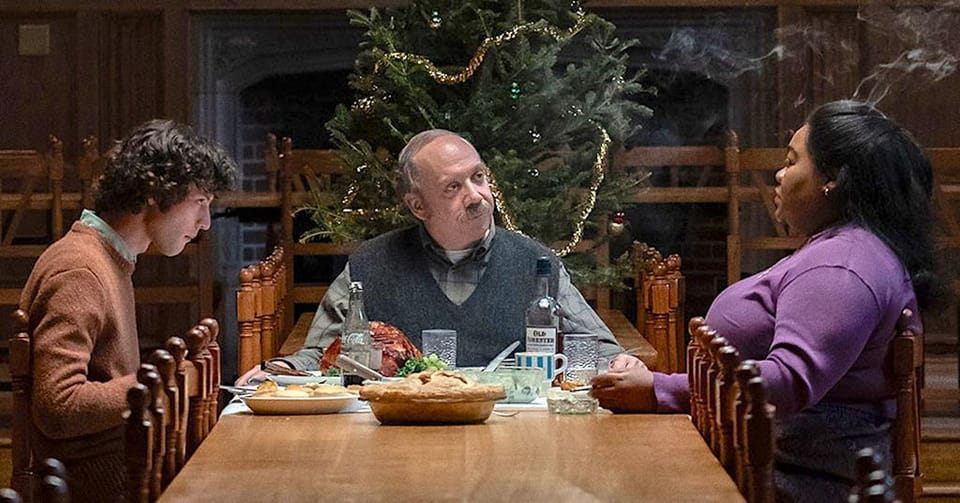
I would like to submit Alexander Payne's 2023 The Holdovers as the most recent proper entry into the holiday cinematic canon. It's a warm blanket of a film about found family and unlikely friendships against the backdrop of a nostalgic 1970s Christmas aesthetic.
The film follows a curmudgeonly Latin teacher (Paul Giamatti) at an elite East Coast boarding school, who's forced to play guardian to a troublemaker student (newcomer Dominic Sessa) as he "holds over" for the holidays for lack of anywhere else to go. The pair are joined by the school cook (the incredible Da'Vine Joy Randolph), a recently bereft mother facing the first Christmas without her son.
Paul Giamatti is such a pleasure to watch work. He manages to bring a movie star's charisma to roles that he plays like a character actor. His character, Mr. Hunham, is reviled by his students and peers alike, he looks terrible and we're told he smells worse, he has a lazy eye that paradoxically switches sides from shot to shot, and he has a penchant for quoting Latin in the most infuriating way possible. But somehow we the audience never question that the man has an inner warmth and deep care for his students.
Matching Giamatti's performance beat-for-beat is Dominic Sessa, who Payne discovered in the theater program of a local high school. Sessa channels a nervous energy into the role that perfectly sells teenage angst and awkwardness. It's an all-time great debut performance by a young actor.
The heart of the movie is Da'Vine Joy Randolph as Mary Lamb. We learn she's worked in the Barton School's kitchens for years in order to afford her son, Curtis, a pathway to a better life only to have it snatched away when he was drafted and died in Vietnam immediately after graduating. The film is clear that, while all three of the holdovers have been dealt a bad hand in life, Mary's pain is categorically different. As a Black woman at an elite white establishment, in service of a system that took her husband, her son, and her labor and left her with nothing, she's suffered in a way that the other two will never understand.
Randolph's performance is complex and layered. She's full of grief and rage that she hides because she knows society wouldn't tolerate it. But despite having everything taken from her, Mary still manages to offer warmth and understanding to the others. What Randolph achieves in this role is astounding and she rightly earned an Academy Award for it.
Despite being nominated for five Oscars and winning one, I feel like The Holdovers remains criminally underrated and I strongly suggest adding it to your holiday watchlist if you haven't enjoyed it yet.
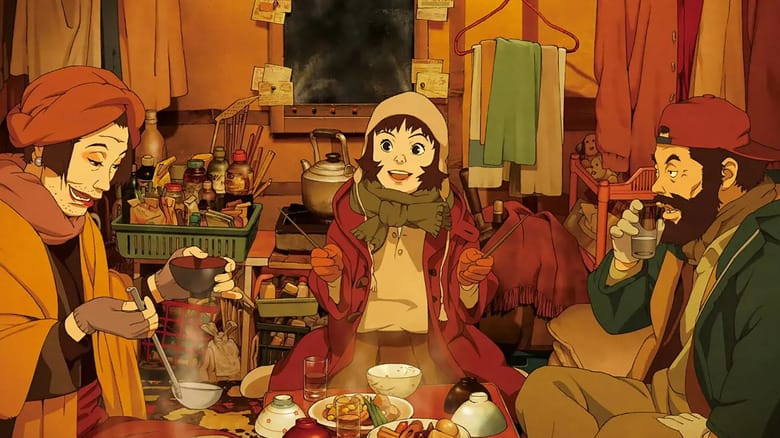
It's Christmas Eve in Tokyo and a baby is discovered left out with the garbage by three people living on the streets. The unlikely trio of guardians—a teenage runaway, a transwoman, and a self-described "old bum"—go in search of their new ward's parents and do a little self-discovery along the way.
Tokyo Godfathers is a story of found family and common kindness that plays out against the gorgeously animated streets of Japan.
Director Satoshi Kon (Perfect Blue, Paprika, Millennium Actress) died tragically young and left behind a filmography solely comprised of masterpieces. If you're looking for an entry point, or if you're just a sucker for snowy urban landscapes like me, this is a wonderful holiday treat.
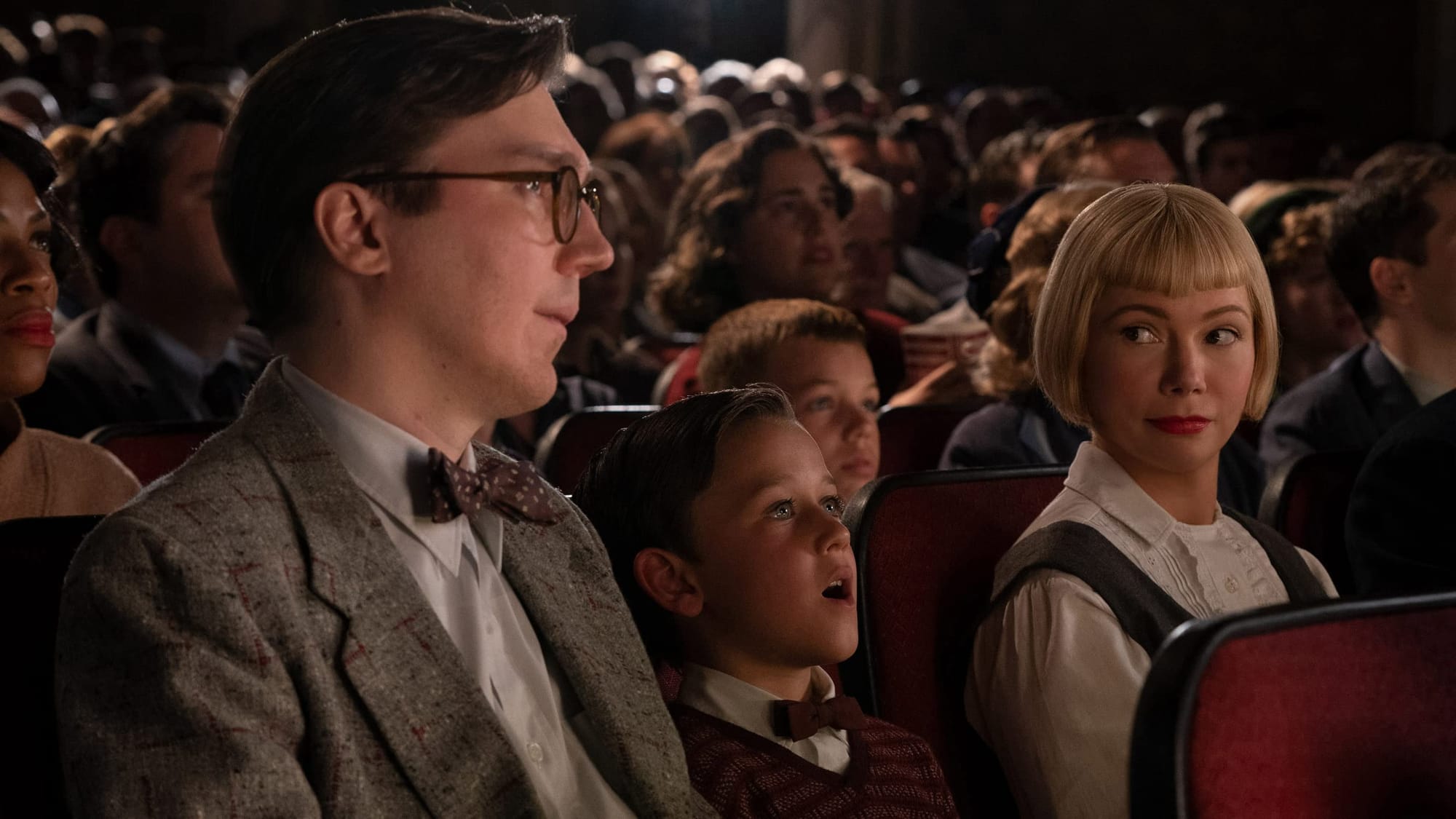
Sometime in the 1960s Steven Spielberg's mother left his father to marry a close family friend. Apparently, it messed him up so badly that he had to go and become the most successful director of his generation. We all cope in our own ways.
2022's The Fabelmans is both an autobiography and a cipher to Spielberg's entire filmography. It's a barely-fictionalized account of his childhood, his early journey to filmmaking, and the family schism that influenced his work for the next half century.
It's a rare display of self-analysis by a filmmaker. Spielberg is sequencing the DNA of his own creativity: the technical mindedness he inherited from his engineer father, the artistic soul he inherited from his musician mother, the preoccupation with narratives about broken families and the protagonists who will do anything to avoid confronting that reality.
Films like Catch Me If You Can and Close Encounters of the Third Kind are suddenly recontextualized as deeply personal films about these familial traumas carried. You come to appreciate that these films we all grew up with, which were often criticized for being all spectacle and no substance, were Spielberg's attempt to work through something all along.
If you have any interest in understanding Spielberg on a deeper level, or you just want to watch a fantastic family drama by one of the best to ever do it, give it a watch.
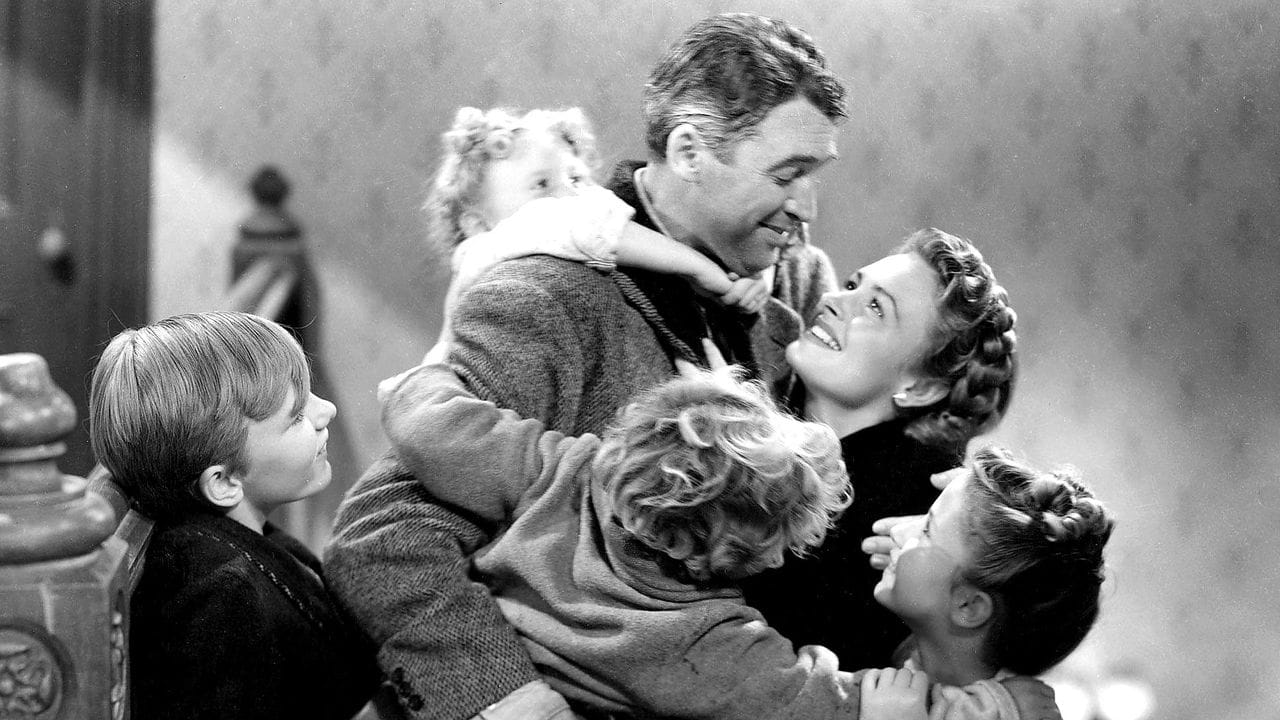
This time last year I felt like I was drowning. I had this distinct feeling that a weight was pressing down on me, growing slightly heavier every passing day. Years spent in a job I didn't care for, dreaming of making a change but telling myself to stick it out just another year had left me hollowed out and unable to make sense of the way time seemed to be slipping by faster every day.
Amidst this personal crisis, I caught a holiday showing of Frank Capra's It's a Wonderful Life at the Balboa Theater and saw myself up there on the silver screen.
It's a film about a man losing hope and finding salvation in the people who love him. It's also about the passage of time and fear of living a life of regret.
The final act is the part that everyone remembers. George Bailey (Jimmy Stewart), facing the prospect of personal and professional ruin, decides the world would be better off without him only to have his hapless guardian angel, Clarence, show him what a sad world that would be. It's an unforgettable premise and also a much smaller part of the movie than I'd thought.
The bulk of the film's runtime is dedicated to George Bailey's life, which plays out in short acts. We see him go from a young man full of dreams and promise, to an early adult with ambition, to a dutiful father and pillar of his community, to a man ground down by the slings and arrows of life. At each step he puts the welfare of his family and his community first and his reward is losing another small part of his dream. It's a slow motion tragedy of a man losing hope.
Produced in 1946, it was Stewart's first role in five years following a career hiatus to serve in WWII. During the war he flew B-24 bombers—the same as my grandfather—in some of the deadliest missions of the war. By all accounts he came back unsure if he still had it in him to act. With all that to carry, filming proved extremely difficult for Stewart.
There's one scene that's become the stuff of Hollywood legend: as George Bailey exhausts the last of his hope he turns to quiet prayer and Stewart seems to get overcome by real emotion. There's a pain and desperation in his prayers that takes your breath away. The frame pushes in and the film goes grainy, suggesting Capra had to crop the shot to capture the power of the moment.
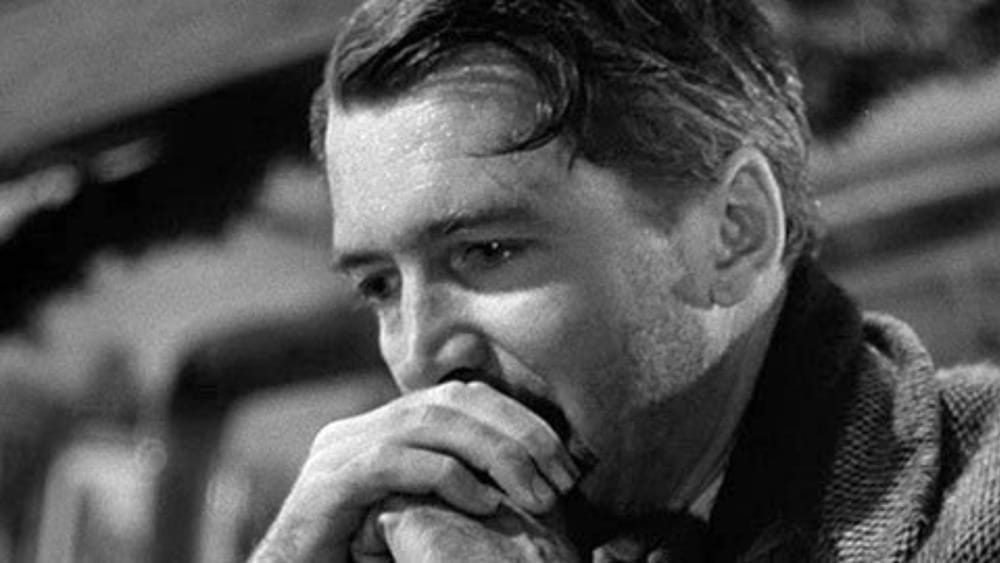
It's an incredible moment from an actor we're not accustomed to seeing that raw.
The beautiful thing about the film is that there's never really any doubt that George Bailey is loved by his family and community. It's clear throughout that they would do anything for him if he'd just ask for help. We know that George's life has worth. He's the only one who can't see it.
Aside from the personal drama, It's a Wonderful Life is about the destructive forces of capitalism versus community solidarity and mutual aid. With everything going on in the world I take some solace that one of America's great holiday films ends with a community fundraiser to foil the plot of a greedy landlord.
My personal crisis wasn't solved by a guardian angel. It took a lot of work: investment in my personal relationships, investment in myself and the hobbies that enrich me, and a career pivot to name a few. But in the moment I can't tell you how comforting it was to see George Bailey read Clarence's parting words: "Remember, no man is a failure who has friends."
Before you go, while I'm feeling sentimental, I'd love to share this clip with you. It's David Lynch, yet another great we lost in 2025, talking about this film with tears in his eyes. There's just something really beautiful about an artist being moved by someone else's art. Consider it a little Christmas gift.
"Incredible."
Happy holidays.
 Tyler Haas