Weekly Roundup: Bugonia, Roofman, and Lega-sequels
The Golden Globes were this past weekend and they have me thinking a lot about genre.
The Globes make the interesting choice to segregate film and television awards between "dramas" and "comedy or musicals". Deep down I understand the rationale: award shows famously bias towards self-serious dramas so separate categories allow a broader representation of the media landscape. But there's just something weird about seeing films like Bugonia, Marty Supreme, and One Battle After Another slotted under the umbrella of comedy.
We live in a time when events are unfolding simultaneously as tragedy and farce, and our films are increasingly mirroring it. One Battle After Another can contain both absurd comedic moments and shockingly prescient scenes of military action against American communities. Auteur filmmakers are increasingly finding refuge and dramatic fodder in the horror genre—one of the few types of film that can still draw patrons to the theater—which results in masterpieces like 28 Years Later and Sinners.
To the extent that it allows filmmakers to explore new stories and ways to tell them I'm all for it. I've heard comparisons between the current moment in film and 1970s New Hollywood movement, when a new generation of auteurs grabbed the creative reins from the ossified studio system. That shift was ushered in by the turmoil of the Vietnam War and the Nixon era, as Americans broadly lost confidence in their leaders and civil society as a whole. When you watch films like Bugonia or Eddington, you can't help but see how they represent a loss of cohesion in both our social fabric and our sense of shared reality.
Anyway, here's what I watched this week:
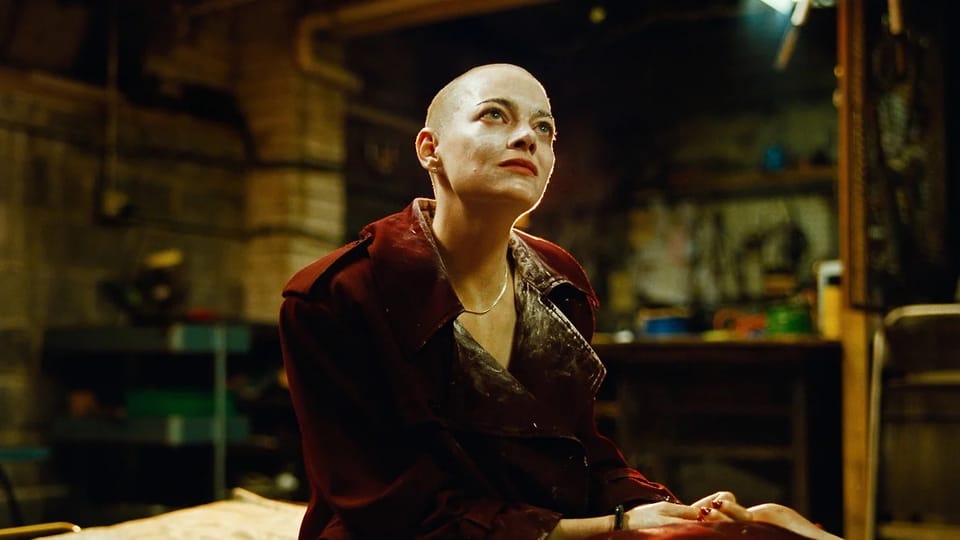
- Bugonia, Yorgos Lanthimos' latest collaboration with Emma Stone, a comedy that's so dark it made me write that entire rant above
- Roofman, in which Channing Tatum plays a thief-on-the-run who's simultaneously very charming and...a bit off
- and two legasequels that were quite bad: Tron: Ares and Jurassic World Rebirth
Bugonia
Bugonia is yet another entry into the canon of 2025 films that made me feel like I was losing my mind. A remake of 2003's Save the Green Planet! it tells the story of an insane conspiracy theorist (Jesse Plemons) who kidnaps a biotech CEO (Emma Stone), convinced that she's a representative of an alien race that's secretly destroying humanity.
The bulk of the film plays out as a sort of two way interrogation between Stone and Plemons. Her trying to convince him that she's a human—no easy feat for a corporate overlord—and him building an insane and increasingly convincing case to the contrary. The understated intensity evokes the vibe of experimental theater, a familiar medium for director Yorgos Lanthimos.
The film's strength is in crafting characters who are simultaneously sympathetic and repellent. Jesse Plemons plays a man who is obviously insane, capable of kidnapping a woman and chaining her in his basement, but we come to understand the trauma that's led him to his warped world view. We see in flashbacks the way his mother, in an extraordinary one scene performance by the great Alicia Silverstone, was rendered comatose by an experimental medical trial run by Stone's company.
Stone, on the other hand, immediately earns our sympathy as a woman in peril but loses a little bit of it whenever she lapses into bland corporate speak. It turns out all you need to convince me someone is an alien is you have them talk about "circling back" or "starting a dialogue".
I can't tell you what Bugonia is about without spoiling it for you. What I can tell you is that this film isn't what you think it is.
Roofman
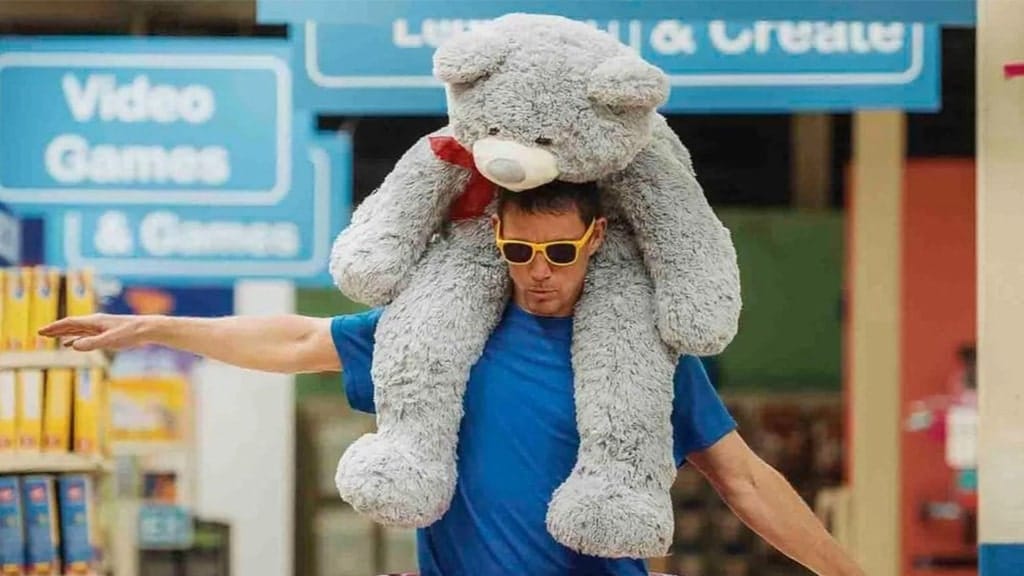
2025's Roofman, starring Channing Tatum and Kirsten Dunst, is an object lesson in tone management. The film's premise is the stuff of broad comedy: a thief with a heart of gold escapes prison and hides out in a Toys "R" Us, eventually striking up a relationship with one of the employees. The problem is that Jeffrey Manchester was a real guy and, while his crimes generally weren't violent, he robbed and hurt actual people. Getting a workable film out of that premise is a tough circle to square. Roofman pulls it off.
There's something about Channing Tatum that makes audiences reject him as a traditional Hollywood leading man. I'd argue it's an innate sense of vulnerability that clashes with the masculine ideal of how a man with his face and physique should act. He doesn't mind playing a dancer, a dummy, or a himbo and for whatever reason (the reason is toxic masculinity) it's made him nonviable in the Chris Pratt-like roles Hollywood would like to put him in.
Tatum's earnest fuckup quality is what powers Roofman. He plays a man who we inherently accept as earnestly well meaning but also socially dysfunctional enough to make the worst and most illegal choice at every step of the way. There's an honesty in his portrayal as a guy who is trying to do what life and society expect of him but for whatever reason just can't seem to work it out.
There's a similar honesty in Kirsten Dunst's performance as a single, working mother. She's cultivated a way to convey warmth and world weariness in recent roles that's on full display here.
The film has a wonderfully early-2000s texture to it. Everything from the lighting to the fashion to the aesthetic of a defunct toy store franchise I last visited around that time wrapped me in a harsh fluorescent blanket of nostalgia. I'm as surprised as anyone to find myself nostalgic for the aesthetic of the Bush era.
It's a sweet and surprisingly layered film. Throw it on sometime when you're looking for a comedy that stays grounded in the human experience.
Tron: Ares
One of my goals with this newsletter is to avoid negativity whenever possible. A hallmark of the internet film snob is approaching works with sneering superiority, which closes them off from new experiences and individual interpretations. It's both creatively bankrupt and honestly just seems like a miserable way to experience art. Instead, I try to meet films on their own terms and find artistry wherever it presents itself.
But sometimes I watch a movie like Tron: Ares and it just sucks.
The Tron franchise is such a strange object. The original 1982 film was—and I'd argue still is—a largely forgotten curiosity of Disney's pre-renaissance "dark age" that attempted to imagine what life would be like inside a computer, in an era when personal computers barely existed. It had little cultural impact—a fact referenced in one of my favorite Simpsons gags of all time—outside of establishing the wireframe-and-neon aesthetic that represented "cyberspace" for much of the 80s and 90s.
Almost three decades later, Disney decided to do something odd. They decided to capitalize on their long dormant IP with a movie that was both reboot and sequel. In creating 2010's Tron: Legacy, Joseph Kosinski created the modern trend of "legacy sequels" (or "legasequels"): films that revitalize dormant franchises while also paying slavish homage to their legacies. It's a genre that's come to dominate the blockbuster market over the past fifteen years with legacy entries in series like Star Wars, Ghostbusters, Jurassic Park, and Top Gun (also directly by Kosinski).
Tron: Legacy got away with a flat script and deeply unmemorable lead thanks to the fact that it looked insanely cool and its soundtrack, composed by Daft Punk, is one of the greatest of all time. It's a film that's objectively not very good but I remember so fondly because it plays like a music video and then Jeff Bridges shows up dressed like the Dude, talking about "bio-digital jazz, man!"
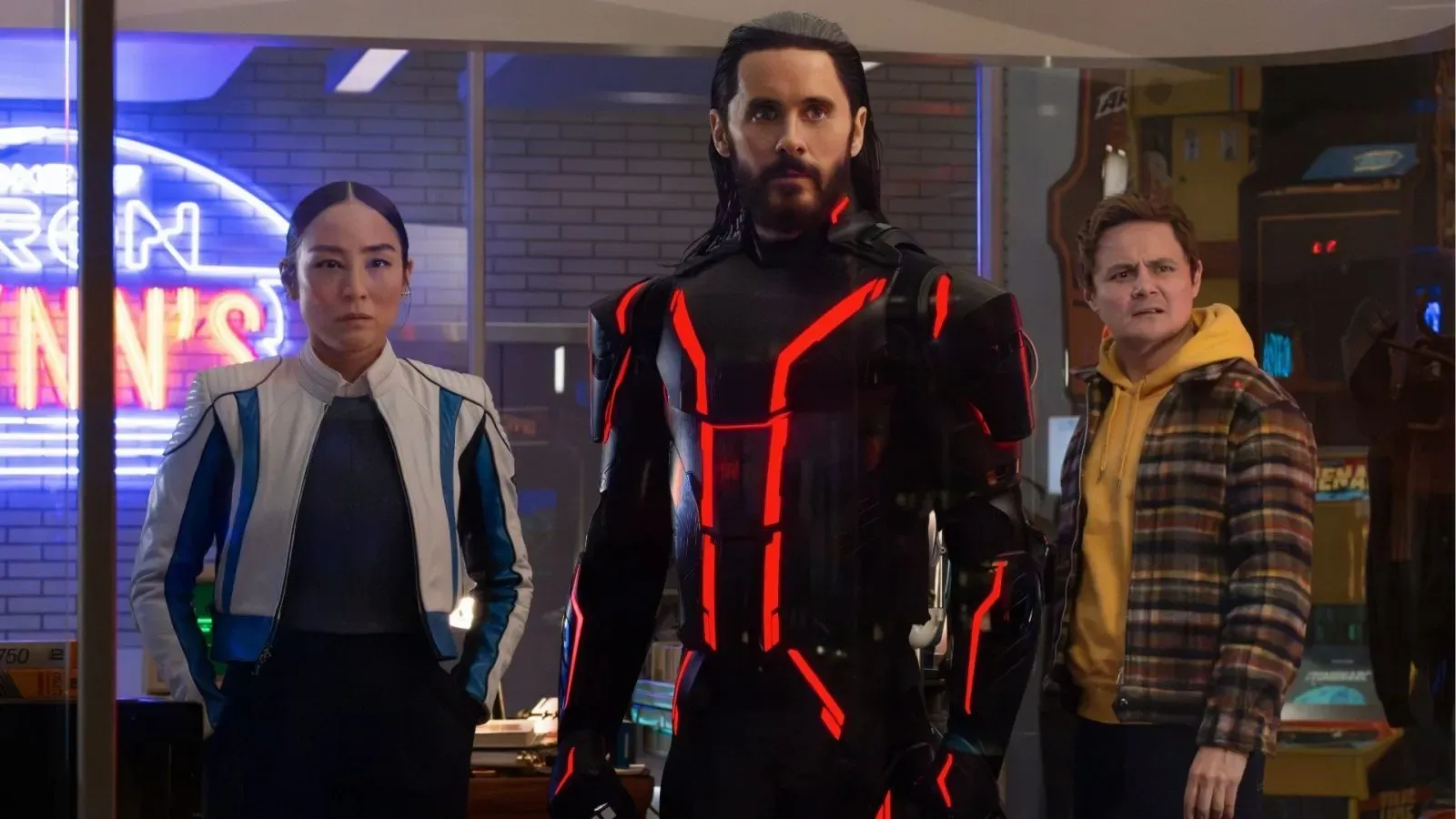
Tron: Ares attempts to recreate that magic but makes a fundamentally baffling blunder: the vast majority of the action happens outside the computer, in the real world. Why would you take a franchise fundamentally based on the premise "wouldn't it be crazy if we could go inside a computer" and set it all in the real world!? Also, why would you make Jared Leto, who is both a bad actor and a bad person, your lead!?
In fairness, you can kind of see what they were going for with the former. The digital world isn't something we really go to anymore, it's something we constantly live in. Digital actors and—increasingly—AI control our politics, our economy, and our discourse, so it's not a huge dramatic leap for the film to imagine digital soldiers stepping out from the computer to invade our streets. But the film doesn't really wrestle with these ideas, they're only there if you squint and turn your head to one side.
Aside from all that, this is the second action/thriller I've seen Greta Lee in this year and I'm sorry to say it just isn't her genre. While no one is doing great work with this script, she seems to particularly struggle with the clunky dialogue and special effects-heavy scenes.
After flopping this badly, I doubt we'll be seeing another entry of the Tron series, at least anytime soon. Rather than be sad about that, I highly recommend you go listen to some Daft Punk while you do some chores.
Jurassic Park Rebirth

There's a recurring bit in the Jurassic World films where a character will explain that they had to genetically engineer increasingly monstrous dinosaurs because the public wasn't impressed by the real ones anymore. It's a remarkably cynical thing for a franchise to say to and about its own audience, especially as the films each do progressively worse at the box office.
Jurassic World Rebirth feels like it was made due to contractual obligations. It's so by-the-numbers that I can give you the whole plot right here: Scarlett Johansson is a lady with a gun who's paid to go to Dinosaur Island to collect dinosaur eggs or something, she's joined by Mahershala Ali and hunky Jonathan Bailey, dinosaurs attack and then they get the eggs and leave.
The real tragedy of Rebirth is how cheap it looks. The original Jurassic Park sequels aren't masterpieces and the Jurassic World films are complete misfires, but they all manage to maintain a high standard of effects quality. Rebirth, however, just looks like cut-rate CGI. The dinosaurs lack weight and blend poorly with their environments. You get the distinct impression that the studio knew this film, and possibly the whole franchise, was a lost cause and cut their losses where they could.
There's not much that works in this film, aside from Jonathan Bailey and his slutty little eyeglasses, but there are hints that they tried to hew closer to the scale and pace of the Park films than the gaudy extravagance of the World movies. It's a course correction that probably came two movies too late.
I'm sure there are other legacy sequels in the pipeline—probably a Jurassic Park reboot too—but I'm starting to wonder if studios are realizing there's just not that much more blood they can squeeze from the stone.
Thanks for reading and please consider coming to an upcoming showtime!
 Tyler Haas