Weekly Roundup: Marty Supreme and a Measured Defense of Die Hard
Happy New Year! It's Liminal Week! The week between Christmas and New Years when time seems to lose all meaning and there's no telling who's working or what stores are open.
This week's roundup reflects that liminal vibe: a contender for best film of the year, a reflection on some things I find interesting about Die Hard, and then some other random stuff I watched over the holidays.
I'm planning to put together a 2025 new release recap in the next week, so keep an eye out for that.
Until then, here's what I watched this week:
- the whole family went to Marty Supreme for Christmas eve, and we all loved it
- for Christmas day we watched Die Hard and...
- The Royal Tenenbaums, which is debatably my favorite Wes Anderson
- for some reason I watched Ready Player One (not one of Spielberg's best!)
- Megadoc, a new documentary about Megalopolis, Francis Ford Coppola's train wreck of a film
- and we rounded out the holiday season with Happiest Season
Marty Supreme
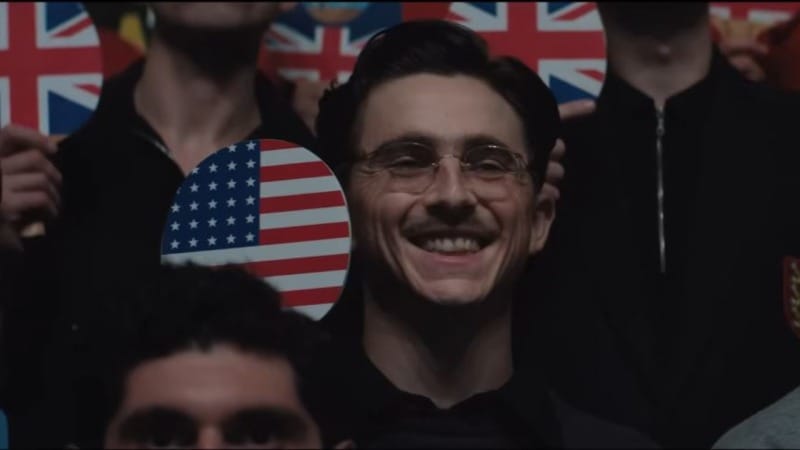
Marty Supreme is so beautiful and baroque and filled to the brim with ideas that I really don't know how to approach writing about it.
So it's a film about ping pong, right? But it's also about masculinity and the ambitions of youth. But it's also about the myth of American exceptionalism and the rise of neoliberalism at the dawn of the American Century. But it's mostly about ping pong.
It's a meticulously crafted mid-century period piece that features a bold, anachronistic soundtrack of 80s New Wave bangers. The opening credits are Alphaville's "Forever Young" played over an animated montage of Timothée Chalamet's sperm fertilizing an egg. Am I doing an okay job summarizing this film?
It features incredible performances by Chalamet, Gwyneth Paltrow, Odessa A'zion, and several dozen non-actors including Tyler the Creator and a guy from Shark Tank.
Go see Marty Supreme in a theater. Let it wash over you. You'll have a great time.
Die Hard
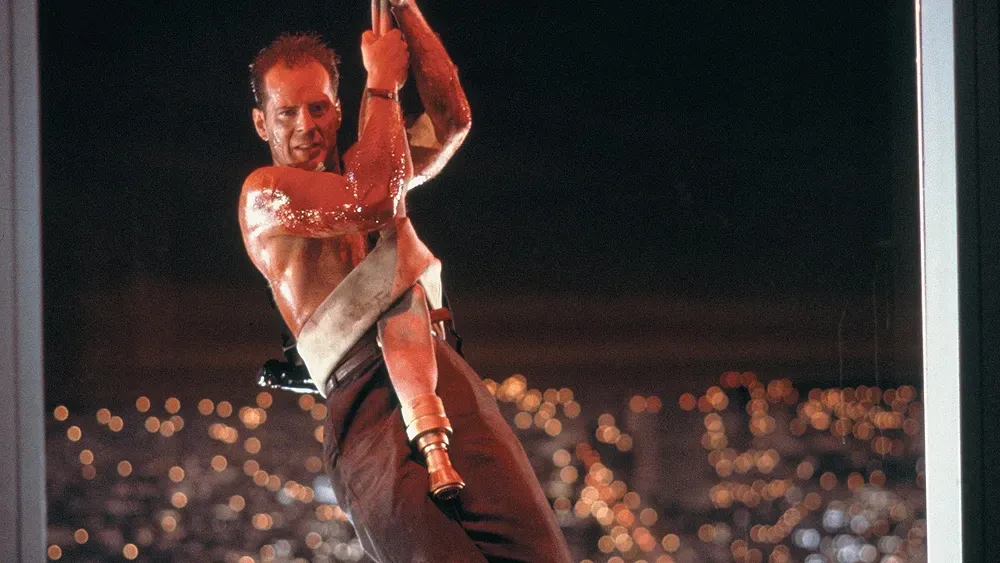
Over the holiday break my friend Bridget texted this to our group chat:
I just watched the first half of Die Hard for the first time. I cannot believe people love this movie! There’s no plot!
Is my opinion wrong?
I want to say first and foremost: it is impossible to be wrong about not enjoying something. Die Hard is a very loud, surprisingly violent film that a vocal (read: male) segment of the internet insists we must slot into the otherwise peaceful and cheery Christmas milieu. It's easy to understand why one would bounce off of it.
That being said, I think Die Hard is a remarkably well crafted film and there's some interesting stuff going on behind its (as Bridget noted, simple) plot.
Setup, Payoff, and Mental Geography
Director John McTiernan (Predator, Hunt for Red October) followed a simple rule with Die Hard: any new piece of information the audience is shown or told will have a payoff later in the film. This may sound like screenwriting 101, but it's rare for a film to commit to it so completely.
Every conversation John McClane has bears some plot relevance. For example, a throwaway bit of dialogue with his seatmate on the plane in the first scene is the reason he isn’t wearing shoes for the second half of the film.
McTiernan goes a step further than most and follows the same pattern for locations as well.
The viewer is shown every location in Nakatomi tower at least once before we get to the heart of the action. By doing this, McTiernan helps the audience build a mental geography. We learn to recognize each room and understand how it relates to the others in space.
The payoff comes when the bullets start flying and the film's pace becomes breakneck. We understand who is where and what the stakes are because we've already been there. If you've ever watched an action sequence and found yourself lost or losing focus, what you're feeling is the lack of this kind of intuitive sense of geography.
The Original Everyman Action Hero
The story goes that when trailers for Die Hard first hit theaters and Bruce Willis appeared on screen audiences laughed. His reputation at the time was as a romantic and comedic TV lead from his work on Moonlighting. In an era of muscle-bound action stars like Stallone and Schwarzenegger (both of whom were offered and turned down the role), Willis was almost too much of an everyman for audiences to accept.
Willis not only pulled it off, but created an entire paradigm of American action heroes that‘s come to dominate our culture. We wouldn't have endless Krazinski and Pratt action vehicles if John McClane hadn't insisted on sitting in the front seat of the limo and fighting a building of terrorists with no shoes on.
What I find interesting about Willis as John McClane is how anxious he plays it. You get a real sense that this man is trapped and frightened. We get the impression that his quips and one-liners are attempts at self-soothing rather than displays of bravado.
It's an interesting performance that's easy to overlook after decades of poor imitations (including by subsequent entries in its own series.)
A Crisis in American Masculinity
Die Hard is plainly a reflection of male American anxieties of the 1980s.
It's about a man, a blue collar cop from New York, flying across the country to try to reconcile with his estranged wife who works a white collar job for a Japanese multinational corporation. The reunion is foiled by urbane European terrorists who wear expensive suits and lack an ideology.
McClain's obstacles reflect the societal struggles of the day: women entering the professional workforce in greater numbers, fear of the rise of multinationals, and a perceived devaluing of "traditional" masculine value signifiers. He may not be able to work a computer, but he establishes his value above both the foreign terrorists and white collar hostages through grit and brawn. The final triumphant beat of the film is when McClane's wife introduces herself using his last name rather than the maiden name she'd been using at the start.
Just to be clear, you don't have to like the societal vision Die Hard presents. I just find it interesting.
So, Bridget, hopefully this gives you something to lock into next time you have to sit through Die Hard.
The Royal Tenenbaums
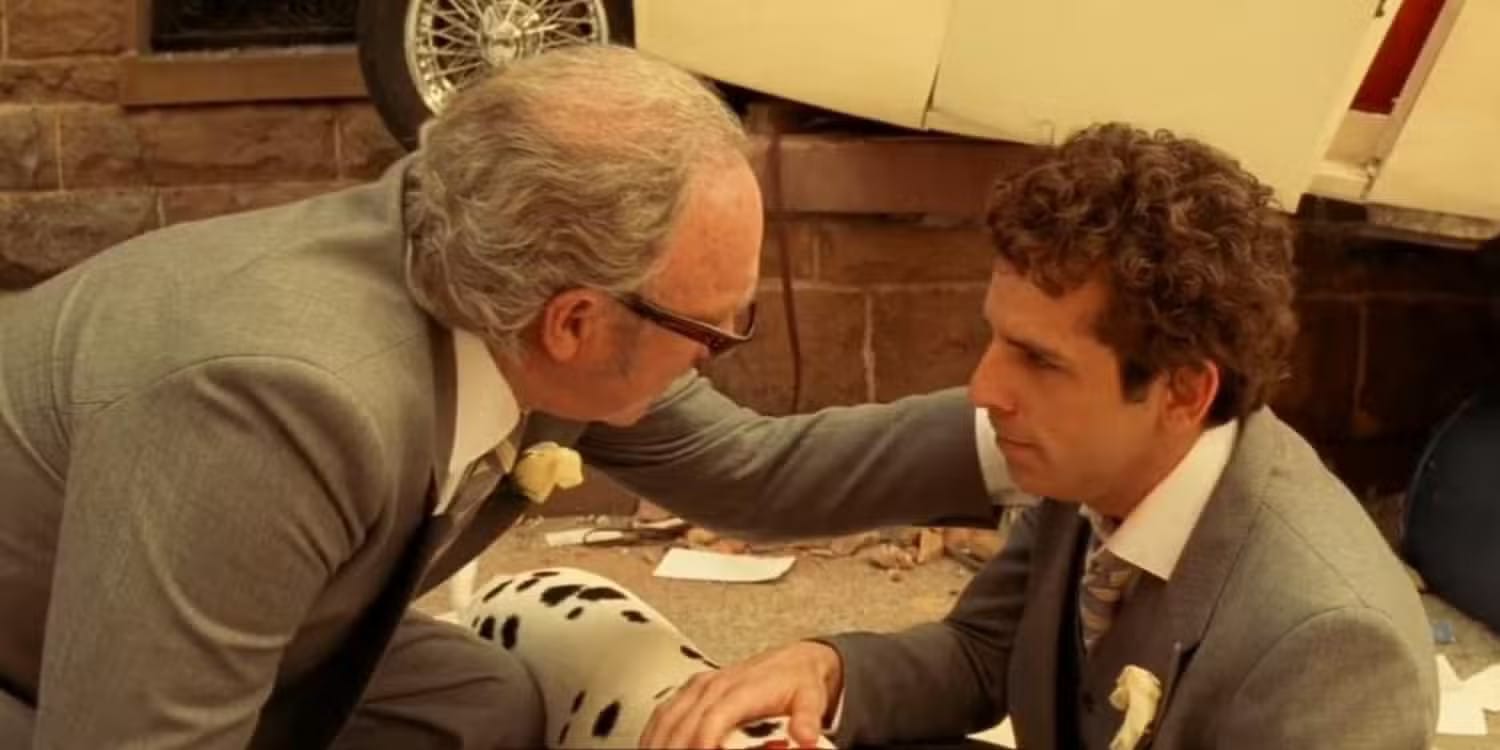
Wes Anderson films don't generally make me tear up. The Royal Tenenbaums does.
It's a scene at the end of the film that does it to me. After a madcap chase scene and a very Wes Anderson panning montage, Chaz Tenenbaum (Ben Stiller) looks up at his estranged sonofabitch father (Gene Hackman) and says the line: "I've had a rough year, Dad."
There's something in the way his voice cracks and he looks down at the ground that just gets me. All of the artificially that Anderson has imposed melts away for a brief, deeply human moment.
After Hackman's tragic death this past year, Stiller wrote a beautiful obituary about working with him and an interaction they had filming this specific scene. I'd highly recommend giving it a read and then putting on The Royal Tenenbaums.
Ready Player One
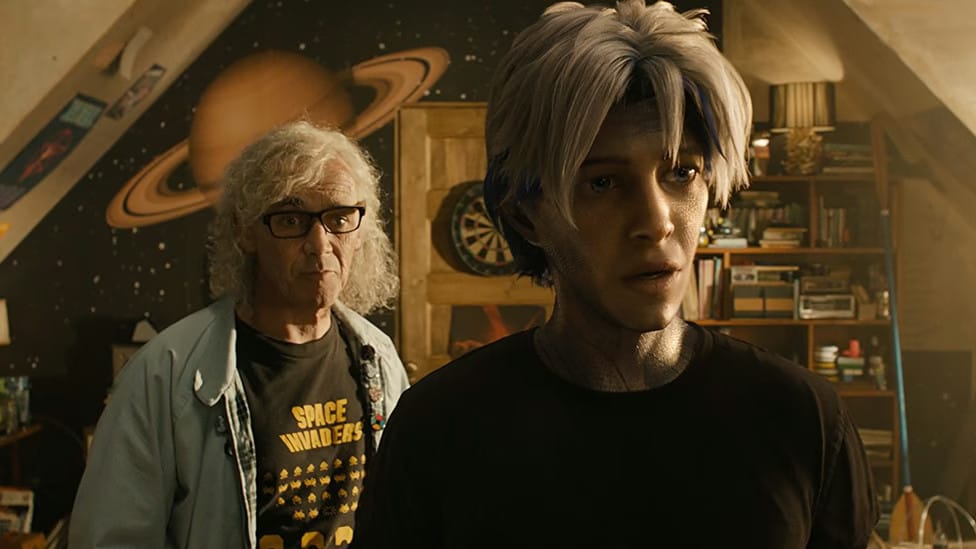
Ready Player One is somehow simultaneously very strange and very uninteresting.
It's an adaptation of a truly terrible book from 2011 that asks the age old question, "what if we lived in a world where knowledge of Star Wars trivia and an ability to quote Monty Python made you rich and famous?" The book, bizarrely, thinks this would be pretty cool.
In a post-Gamergate world, the most interesting way to adapt Ready Player One would be to engage with its core flaws head on. It might make the case that maybe it's in fact bad to value nostalgic regurgitation over original creative thought. Maybe uncritically idolizing the media of the past, stripped of cultural context, isn't the best way to engage with culture?
With Steven Spielberg in the directors chair, the film had every opportunity to be interesting. Surely the man who invented the blockbuster franchise as a concept has something to say about its legacy on culture! Right?!
No. Not really.
Instead we get a by-the-numbers CGI action movie that's competently made and asks the viewer to consider logging off and touching grass maybe once or twice each week.
Megadoc
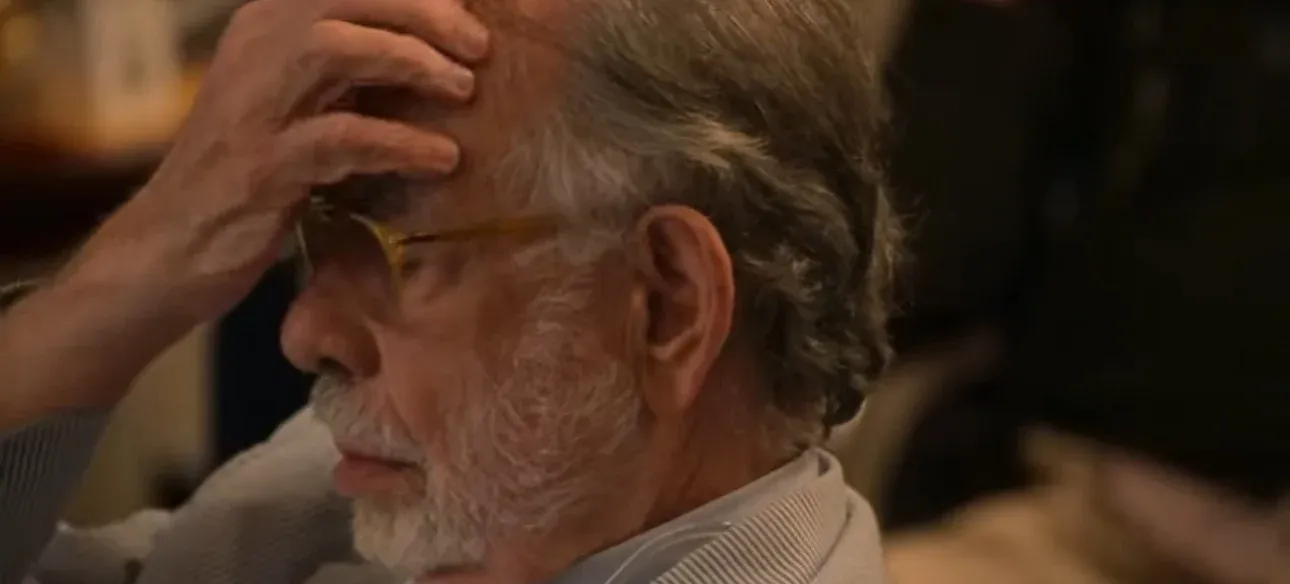
Francis Ford Coppola has twice now been the subject of documentaries about the tortured production process of films he's directed.
The first was 1991's Hearts of Darkness, which chronicled the making of Apocalypse Now (1979) and how filming in the jungle with real military hardware and everyone coked out of their minds almost destroyed Coppola and everyone else involved. It was an act of insane hubris, but one that resulted in a film often cited as one of the greatest ever made (I wouldn't know, I haven't seen it.)
The second is the recently released Megadoc, which chronicles the making of 2024's Megalopolis, a bizarre misfire of a passion project that may have actually destroyed what remained of Coppola's career and finances.
The tragedy at the heart of Megadoc is that Megalopolis wasn't a particularly hubristic endeavor. We don't see Coppola making insane choices or slowly going mad in the jungle. Instead we see an old man, a pioneer of a different era of filmmaking, growing increasingly overwhelmed by the complexity of modern production.
I don't have a particular affinity for Francis Ford Coppola. Megalopolis was his only film I've seen in the past ten years and I thought it stunk. Megadoc didn't convince me otherwise, but it did help me appreciate the quiet tragedy of an artist past his prime staking his fortune and credibility to try to produce a novel creative work and being stymied by a system he no longer understands.
Happiest Season

It feels a little silly to be writing about yet another Christmas movie on New Years Day, but such is the nature of how I've designed this newsletter, so I'll be brief.
Happiest Season is a light holiday rom-com from 2020 that stars Kristen Stewart (Twilight) as she goes with her partner, MacKenzie Davis (Halt and Catch Fire, Station Eleven), to spend the holidays with the latter's family. The catch? Davis hasn't come out to her conservative family and Stewart is forced to pretend they're just roommates.
It's an, admittedly, tough set up for a light holiday romp. I understand the people on Letterboxd that find Davis' character irredeemable and the classic "happily ever after" resolution a bit cheap given the circumstances. Maybe it's just because it originally released in the depths of a truly dismal year, but I just can't help but find it charming!
I love Kristen Stewart and her weird little acting mannerisms! Aubrey Plaza playing a lesbian is always good! Dan Levy is really funny! Victor Garber and Mary Steenburgen!
Anyway, there's my final holiday recommendation in case you want to watch a Christmas movie in January.
Happy New Year!
Thanks for reading and please consider coming to an upcoming showtime!
 Tyler Haas